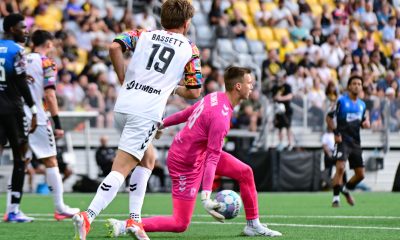
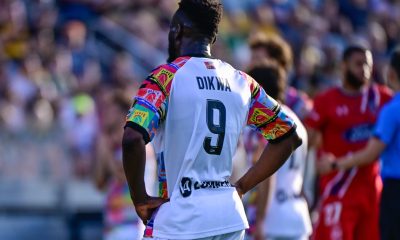
On Saturday, July 6, the Pittsburgh Riverhounds spent 90 minutes sweating and running and scrapping against Monterey Bay FC before defensively collapsing in stoppage time. They lost 1-0.
But the weather was nice, and the promotions department had brought former WWF (now WWE) wrestler ‘Hacksaw’ Jim Duggan. The view of the Monongahela in the evening dusk was as lovely as ever. Freight trains quaintly rumbled by. Tika Bar rafts and Gateway Clipper paddle steamers plied the waters. The popped-collar and boat shoe set were on their yachts by the point. Attendance at Highmark Stadium was an eye-popping 5,018. Keeping in mind that the Hounds, in the past, have considered anything above roughly 4,000 a sellout, the team had pulled off 7 have sold-out matches in 2024. That’s out of nine total home games: only an early-April match in chilly 40 degree weather and a mid-week US Open Cup match failed to cross the 4,000 seat threshold.
Add it all up, and you find that the Riverhounds are averaging 4,428 in all matches; looking only at USL Championship clashes, Pittsburgh is averaging 4,840 spectators through the turnstiles each week.

If the trend holds, the Riverhounds will likely be close to their record-breaking 2023 average attendance of 5,073; and unless some kind of catastrophe strikes, they will certainly exceed their 2022 average attendance of 3,934.
But while the sales and marketing department for Tuffy Shallenberger’s Hounds are more than satisfied with how things are going at the ticket office, Bob Lilley and the coaching staff are surely less happy up in the coaching suite. The Hounds sit a woeful 3-6-9 (WTL) in USL play, firmly rooted at the bottom of the Eastern Conference table. A winning season isn’t impossible; a return to the playoffs is still in reach. But overall it looks like this might be the worst season for the Riverhounds in the Bob Lilley era, which began in 2018.
The question is: does it matter?
And if it doesn’t, why not?
The Riverhounds have scored just 11 goals this season through 18 matches; the worst in USL. And yet despite a lack of electric firepower in the attack and despite an ever-growing pile of defeats, Pittsburgh seems to still draw plenty of fans.
There are several possible explanations.
First, the Hounds might be reaping the rewards of the five previous years of success. Soccer fans in Pittsburgh have slowly grown accustomed to winning soccer and exciting scoring at Highmark. The well-known faces like Kenardo Forbes, Danny Griffin, and Robbie Mertz have dazzled the crowd enough in the past half decade that the market for soccer, and for the Riverhounds in specific, has grown unabated in recent years. The recent downturn in results hasn’t impacted fans because, in effect, they’ve come to see the kind of show they became accustomed to from 2018 to 2022. In other words, winning matters, but the effects aren’t felt immediately in USL the way they might be in, say, the NFL or in MLB.
Second, it might be the stadium experience. Anyone that has tuned into the ESPN plus broadcast or has soccer-mad friends in other cities knows that folks salivate over the Highmark-on-the-Mon experience. Devon Kerr and Mike Watts have often waxed poetic about the stadium’s charms. And fans in Western Pennsylvania have noticed the small improvements, season over season, to the stadium experience; from improved food to the corner flag container ‘suites’. The word is slowly getting out that going to a Riverhounds game is affordable and enjoyable.
Third; perhaps consistent efforts at advertising, marketing, and promotion are succeeding at getting the word out. I’ve noticed that local NPR affiliate WESA announces upcoming home games at Highmark Stadium in the Friday news broadcast right after they mention the local baseball team, the Pittsburgh Pirates. All the team’s efforts at text and social media marketing, billboards and TV commercials is working.
Fourth is what I call ‘the Savannah Banana effect’; that minor league sports teams thrive not on wins and losses but rather on ‘vibes’. This is sort-of a corollary to my second point about the stadium experience: that fans are there for some nice weather and some nachos and the tiki boats and also a fun soccer game. Whether the home team wins is immaterial. For those that are unaware, the Savannah Bananas are a minor league baseball team that effectively have given up on the idea that winning matters at all in lower-level sports. The Bananas have taken the idea of sport-as-entertainment first pioneered by the Harlem Globetrotters and multiplied it by a million. There are team-wide dance routines; absurd fan contests; bizarre but compelling rule changes; crazy costumes; and more. The Riverhounds are less about ‘the game’ then ‘the event’. Add to all that the robust tailgating culture that has slowly and steadily grown, and it seems clear that Hounds experience is far greater than twenty two men chasing a ball for ninety minutes.
Hounds owner Tuffy Shallenberger certainly doesn’t mind that a losing season hasn’t hurt the finances of the team – at least not yet. If the team fails to make the playoffs, it will hurt a little as the club misses out on added revenue from extra games that are sure to be sellouts. But Tuffy, and many of the more committed fans as well, do really care about wins and losses. The Hounds are the oldest team in the top flight of USL to have never won a championship.*
Additionally, long term, putting up multiple losing seasons is probably not a good plan. The Riverhounds have yet to truly feel any knock-on effects from their struggles on the field this season, but that doesn’t mean the team and its owners are likely to turn into the Cleveland Indians or Chicago Cubs of yore: baseball teams that we’re ‘happy to be there’ but seemed to have little-to-no aspirations of success. The Riverhounds under Bob Lilley want to win; and he and Sporting Director Dan Visser will likely tinker with the current roster both this year and before the 2025 season to get the desired results.
But it is worth thinking about the broader meaning of a Pittsburgh sports ecosystem where there’s tremendous enthusiasm for soccer regardless of results. If a mediocre second-division men’s team can sellout their stadium nearly every week, what would happen with a first division MLS team? What about an first division NWSL women’s team? If a losing Hounds team can sellout a 5,000-seat stadium every week, what would have with a .500 ballclub in a revamped and improved 10,000 seat Highmark Stadium? This season’s turnstile successes – in the face of ongoing on-field struggles – might leave close followers of the Pittsburgh soccer scene asking real questions about what the future portends for the beautiful game here in the Mon Valley.
— — — —
* – Charleston Battery began in 1993; they won the A League Championship in 2003 and USL titles in 2010 and 2012. Richmond Kickers also began in 1993. They won the A League in 2001, as well as winning US Open Cup in 1995, the final year before MLS began operating. The Riverhounds, begun in 1998, are still seeking their first trophy (although they won the ‘Players Shield’, which goes to the team with the best overall record, in 2023. It had never existed until … 2023. An earlier version of this story mistakenly stated the trophy did not yet exist. It, apparently, does.)


PSN’s Featured Community Partner: Open Field International



Pittsburgh Riverhounds
USL Championship Atlantic Division Preview: Familiarity breeds contempt