U.S. Soccer announced on Thursday the format, schedule, and participating teams for the tournament proper of the 111th edition of the Lamar Hunt U.S. Open Cup.
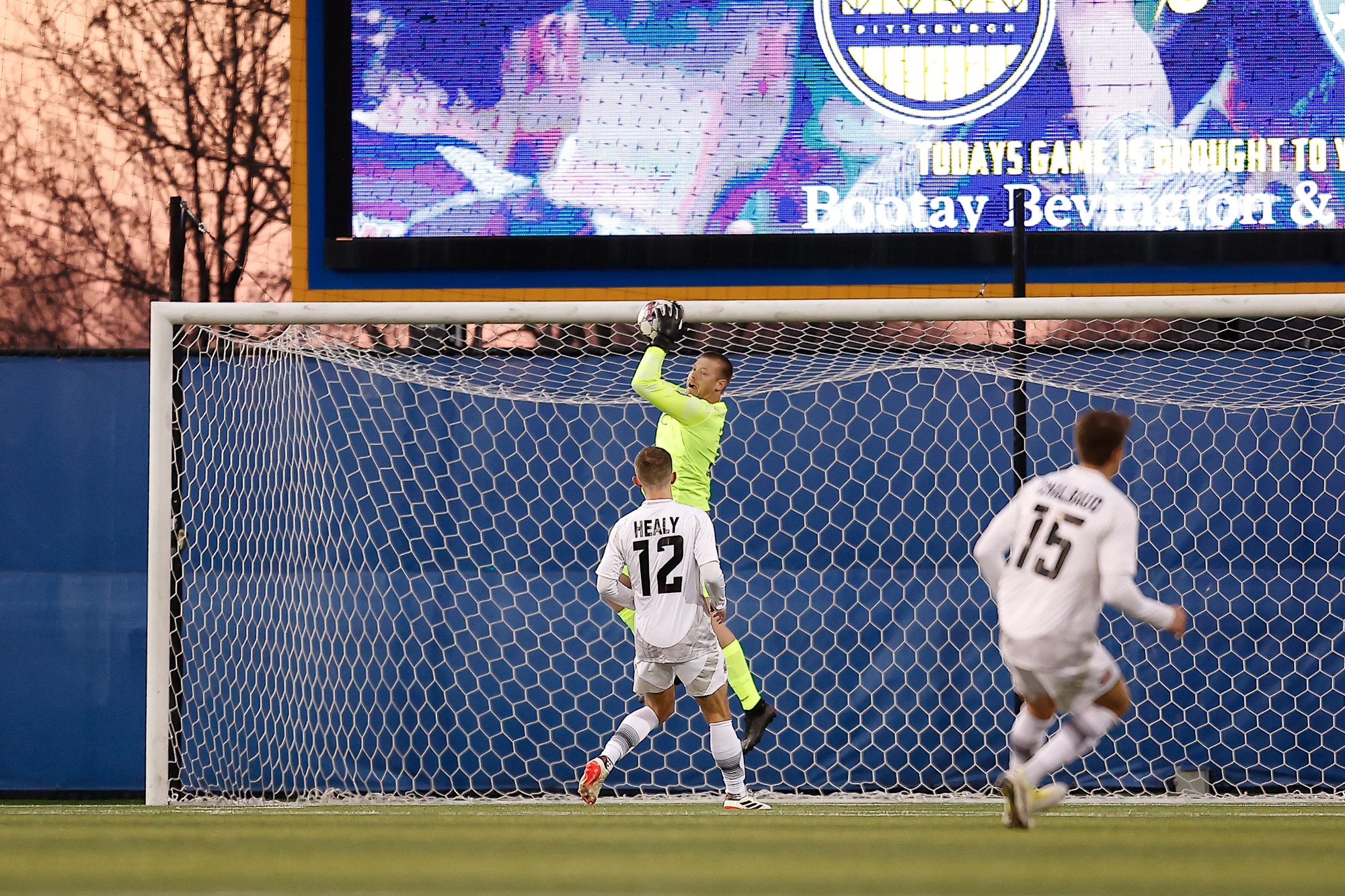
The good news for Pittsburgh soccer fans is that both the Pittsburgh Riverhounds and Steel City FC will be participating.
The bad news is that the tournament has been cut down to one fewer round and the field of professional teams has been reduced.
U.S. Soccer’s historic national club championship, that celebrates elite amateur and pro soccer in communities across the country, begins in mid-March and will conclude with a showpiece final on Wednesday, October 21. CBS Sports will return as the multimedia rights partner for the 2026 competition.
As a result of the format changes, the Riverhounds qualified as one of 17 teams from USL Championship. The Hounds have enjoyed success in the Nation’s Tournament, defeating three Major League Soccer teams, with upset wins against New England, Columbus and New York City FC, in the past three years, earning berth’s in the tournament’s quarterfinal round (2023) and Round of 32 (2025).
Steel City FC, Pittsburgh USL League Two outfit, earned its spot in the 2026 tournament via qualifying, winning three matches in October and November to advance to the proper tournament for the second time in the past three tournaments. In 2024, Steel City qualified as a member of NPSL, hosting a first-round match, losing to Michigan Stars, 1-0, at Ambrose Urbanic Field.
There’s a good chance that Steel City FC could face the Riverhounds in either the first or the second round, depending on how U.S. Soccer overall format, draw groups and pairings shake out. US Soccer does most of the early round draw by geography, along with the basic mathematic principles of a single-elimination competition.
This likely puts Hounds / Steel City FC in the same four-team pod to start.
A field of 80 teams will contest for a $1 million purse with a place in the 2027 Concacaf Champions Cup also up for grabs. The U.S. Open Cup format will feature seven rounds – one fewer than recent editions – to avoid overlap with the FIFA Men’s World Cup™ calendar.
Because the competition features one fewer round than recent editions, the field of professional teams has been reduced from 64 to 48, with slots for each professional division allocated as evenly as possible. League standings will serve as qualifying criteria to determine which professional teams are eligible, therefore all teams participating in 2026 U.S. Open Cup must have played a league season in 2025.
As a result, 17 clubs from the USL Championship, 13 clubs from USL League One, and 10 clubs from USL League Two are set to represent their respective leagues in the 2026 edition of the tournament.
USL Championship (17 clubs): Charleston Battery, Colorado Springs Switchbacks FC, Detroit City FC, El Paso Locomotive FC, FC Tulsa, Hartford Athletic, Indy Eleven, Lexington SC, Loudoun United FC, Louisville City FC, New Mexico United, Orange County SC, Phoenix Rising FC, Pittsburgh Riverhounds SC, Rhode Island FC, Sacramento Republic FC, San Antonio FC
USL League One (13 clubs): AV ALTA FC, Charlotte Independence, Chattanooga Red Wolves SC, FC Naples, Forward Madison FC, Greenville Triumph SC, One Knoxville SC, Portland Hearts of Pine, Richmond Kickers, South Georgia Tormenta FC, Spokane Velocity FC, Union Omaha, Westchester SC
USL League Two (10 clubs): Asheville City SC, Des Moines Menace, FC Motown, Flint City Bucks, Laredo Heat SC, Little Rock Rangers, Northern Virginia FC, Steel City FC*, Ventura County Fusion, Vermont Green FC
* – Qualified through regional qualifying
In addition to the qualifying criteria for the professional divisions, the competition has adjusted two rules to align with the current ecosystem for professional and amateur clubs.
First, a one-club, one-entry rule applies to all divisions. Under this rule, a professional club must enter its highest-level professional team. For the Open Division, the National League qualifying track was eliminated and all amateur teams are entered directly via U.S. Soccer.
Second, all numerical limits to the number of players that can be eligible for a competition roster have been removed across all divisions. All players from a club are eligible to participate, and players can be added up to one day prior to a match – subject to league and U.S. Soccer player registration regulations as well as competition eligibility rules related to cup-ties, length of loan and disciplinary action.
Tournament Format
The First Round will be played on March 17, 18 & 19 and will continue its format of 32 matches featuring teams from the Open Division facing off against a professional opponent. The amateurs will face off against one of 17 professional teams from Division II or 15 professional teams from Division III. The 32 winners from the First Round will then face off in a Second-Round matchup on March 31 or April 1.
Each of the 16 teams that advance from the Second Round will face one of the 16 Division I professional teams from Major League Soccer in the Round of 32 on April 14 or 15. Eight of the MLS teams will be seeded as home, and eight will be seeded as away ahead of this draw based on the qualifying criteria.
The final 32 teams will play down to a field of four semifinalists in May before the competition breaks until the semifinals on September 15 or 16. The final match is slated for Wednesday, October 21.
2026 Lamar Hunt U.S. Open Cup Schedule
First Round: Tuesday, March 17 – Thursday, March 19
Second Round: Tuesday, March 31 – Wednesday, April 1
Round of 32: Tuesday, April 14 – Wednesday, April 15
Round of 16: Tuesday, April 28 – Wednesday, April 29
Quarterfinals: Tuesday, May 19 – Wednesday, May 20
Semifinals: Tuesday, Sept. 15 – Wednesday, Sept. 16
Final: Wednesday, October 21
First and Second Round draws and schedule will be announced by U.S. Soccer in January. The first live draw will be held Tuesday, April 2, when the Round of 32 and subsequent round pairings will be determined.
The overall format, draw groups and pairings will be based on geography, along with the basic mathematic principles of a single-elimination competition. Random selection will be used to solve a lack of logical geographic fit. Draw groups may be created to account for venue availability in any round, based on the league schedule of competing teams or other conditions per tournament regulations.