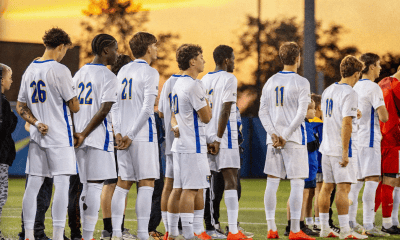
A month ago, a proposal to move Men’s Division I College Soccer to a two-semester schedule model long campaigned for by many veteran coaches, including Pitt’s Jay Vidovich and Duquesne’s Chase Brooks, appeared to be well on its way to finally becoming reality.
Over the course of the past month, things have changed drastically.
The structural overhaul—which would have distributed 25 matches across the fall and spring semesters with a May championship starting in the 2027–28 academic year—was overturned during the final hours of a mandatory 30-day rescission period.
Reporting on Thursday night from national soccer journalist Tom Hindle (GOAL) along with a few other reputable media sources revealed a major catalyst behind the proposal’s stalled momentum: a surprise “no” vote cast by an ACC Athletic Director in an October NCAA meeting, executed without the prior knowledge of his own men’s soccer head coach.
That vote came directly from University of Pittsburgh Athletic Director Allen Greene.
Pittsburgh Sports Now and Pittsburgh Soccer Now have out to Pitt’s Sports Information Office and Athletic Department leadership on Friday afternoon seeking official comment regarding Greene’s vote, the lack of alignment with head coach Jay Vidovich, and the administration’s position on the legislation.
Following the NCAA Cabinet’s initial approval of the proposal in October, Vidovich spoke passionately to Pittsburgh Soccer Now about the potential transformation.
“I think it’s probably one of the most transformational things that will happen in college athletics—maybe in the history of college athletics—to put us in our proper spot to be able to train and play a game a week, and improve the lives of the student-athletes academically and athletically,” Vidovich shared with Pittsburgh Soccer Now’s Tunde Akinlosotu following the Panthers win in October.
“It’s just really exciting. The ability even just to grow the championship—to have the championship in May versus late December—is a big thing. It’s tremendous progress for our sport.”
Across town on the Bluff, Duquesne University head coach Chase Brooks echoed Vidovich’s sentiments, framing the existing autumn calendar as a threat to player welfare:
“It’s long overdue, especially from a health and safety aspect for the student-athletes,” Brooks told PSN. “No other sport with the same type of demands of its athletes asks them to play a game, then asks them to do it two days later, and again, do it three days later. It’s asinine. The fall has been ‘survival of the fittest’ in men’s soccer for decades now. This gives us a chance to truly showcase our sport and educate our student-athletes.”
Additionally, though they have shared with Pittsburgh Soccer Now that while NCAA Division Women’s Soccer Committee was not moving forward with a Two-Semester Model, Pitt Women’s Soccer Sporting Director, Randy Waldrum, and Head Coach, Ben Waldrum have also voiced their support of this model too.
As the rescission tally surged past the 241-vote threshold to block the legislation, collegiate soccer leaders expressed frustration over the NCAA’s voting structure.
Maryland head coach Sasho Cirovski reported that 41 of the final 50 votes to rescind came from Division I institutions that do not even field a men’s varsity soccer program. Cirovski publicly criticized athletic directors for lobbying across conferences to defeat a model built for player safety, calling it a “dark day” for collegiate soccer that leaves the sport with “zero growth over the last 40 years.”
Furthermore, reports indicate the Big 12 Conference abstained as a block during initial cabinet proceedings, which prevented the proposal from reaching the 75% supermajority needed to avoid the rescission period entirely.
Administrative Concerns vs. Coaching Vision
While coaches like Vidovich and Brooks view the two-semester model as essential for player safety and academic balance, administrative pushback from athletic directors like Greene centered on athletic department economics and facility operations:
-
Facility Sharing: Scheduling spring matches on campus venues creates scheduling conflicts with spring sports, including lacrosse, baseball, softball, and track and field.
-
Staffing Strain: Multi-semester travel schedules place continuous operational demands on athletic trainers, academic advisors, media relations, and travel coordinators across both semesters.
-
Precedential Risk: ADs expressed concern that creating a customized two-semester schedule for men’s soccer would prompt other Olympic sports to demand similar year-round competitive calendars.
What Lies Ahead
With the 241-vote rescission threshold breached, Division I men’s soccer will remain on its traditional fall calendar for the foreseeable future.
However, coaching leaders have signaled that the fight for schedule modernization is far from over. As Cirovski noted in post-vote interviews, advocates for the two-semester model intend to regroup, though future iterations may look vastly different.
Pittsburgh Sports Now and Pittsburgh Soccer Now will continue to monitor this developing story and provide updates once the University of Pittsburgh Athletic Department responds to our inquiry.


PSN’s Featured Community Partner: Open Field International



Pittsburgh Riverhounds
USL Championship Atlantic Division Preview: Familiarity breeds contempt