LILLEYBALL IN PITTSBURGH: ORAL HISTORY (PART I)
One would think that this story begins with one of the most stunning press conferences in Pittsburgh soccer history.
We’ll get to that shortly, but Bob Lilley had always been lurking around and in the fringes of Pittsburgh’s soccer scene.
On November 14, 2017, the Highmark Stadium press room was packed with media—including you—expecting a standard end-of-season update or perhaps a front-office addition.
Instead, the club dropped what the Steel Army called a “bomb”:
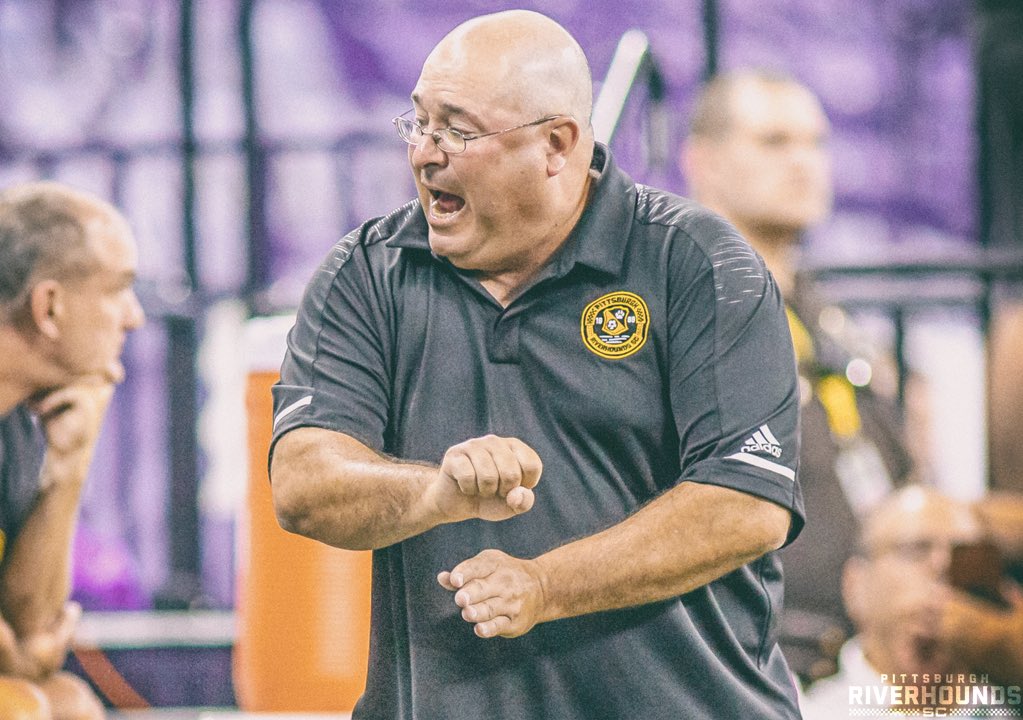
Dave Brandt was out, and the bane of Pittsburgh’s existence in Rochester, Bob Lilley, was in.
This is a day that permanently altered the trajectory of professional soccer in Pittsburgh.
For nearly two decades, the Riverhounds had been a club of starts and stops—flashes of potential undermined by a revolving door of leadership and a lack of a cohesive identity.
This era was defined by the transition from trying to compete to expecting to win.
The keys to the turnaround was establishing a defensive identity and the arrival of the Loyal Lieutenant, Kenardo Forbes. But none of that would have been possible without the architect: Bob Lilley
The Lurking Legend
Before the 2018 revolution, Bob Lilley was the Phantom of Highmark.
To the fans, he was the clinical, frustrating architect of the Rochester Rhinos who always seemed to leave Pittsburgh with three points. But to the soccer lifers in Western Pennsylvania, he was a familiar face with deep, localized roots.
The Local Ties: Lilley wasn’t a stranger to the 412. He had played for the Pittsburgh Stingers (CISL) in 1994 at the Civic Arena and had spent decades recruiting the region. His Rolodex was filled with Pittsburgh names—coaches, scouts, and former teammates who respected his tactical obsession.
Bob Lilley (on his Pittsburgh roots): “I’ve always liked the city. I’m a Pennsylvania kid in a lot of ways. I’ve been coming in and out of here for twenty-plus years, whether playing or coaching. I knew the potential was here; the stadium, the fans—it just needed that final push.”
One of the most telling moments of the Lilley era happened two months before he was actually hired.
Following a Rochester win at Highmark Stadium in late 2017, John Krysinsky (PSN) found himself waiting outside the locker rooms. While waiting for the then-struggling Hounds staff, he ran into Lilley.
The Media (John Krysinsky, PSN): “It was one of those moments that sticks with you. Rochester had just beaten the Hounds, and while I was waiting for the home side to come out and explain another tough result, there was Bob. He didn’t have to talk to me—he was the visiting coach, he could have just hopped on the bus. But he stood there and gave me ten minutes of incredibly insightful analysis on the game and, interestingly, on the Riverhounds themselves.”
The Tactician: Lilley’s willingness to provide quotes and tactical insights to the local media showed a level of professional respect for the Pittsburgh market that many didn’t see from the stands.
Bob Lilley (September 2017, via PSN): “This is a tough place to play. They [the Hounds] have some pieces, they have some energy. It’s about putting those pieces in the right spots consistently. You can see the foundation is there.”
Lilley’s presence wasn’t lost on the Hounds’ ownership. Tuffy Shallenberger had been watching Lilley from across the pitch for years, admiring the very traits that drove Hounds fans crazy.
Tuffy Shallenberger: “I’d watch Bob on the other sideline and think, ‘That guy is exhausting.’ He never stops coaching. He’s always adjusting. For years, I’d see him around the league and we’d have a mutual respect. When the licensing issue with Dave [Brandt] came up, I didn’t need to do a national search. I knew exactly where Bob was.”
The Media (PSN): “The irony was rich. For years, Hounds fans had been cursing Lilley’s name because his teams were so disciplined and hard to break down. Then, overnight, those exact traits became the thing we were most excited about.”
The November Surprise
The transition was as abrupt as a Lilley counter-attack. Dave Brandt, who had led the Hounds to a mediocre but improved 2017, was technically ineligible to lead a Division II side due to the USSF “A” License requirement.
Meanwhile, 300 miles away, the Rochester Rhinos were teetering on a hiatus.
Tuffy Shallenberger (Owner): “This all comes down to a licensing issue. We were not in compliance… Naturally, the first person to come to mind was Bob. I think Rochester probably has a press conference going on at the same time. They were teetering on whether they were going to exercise his option. He was my first choice.”
Bob Lilley (Initial Statement): “I’m not here to burn down the house. I’m here to add on to some of the positives that have already been put in place… Ultimately, we want to build a consistent winner here that’s in the playoffs every year and ultimately wins a championship. You know the history of Pittsburgh sports.”
The Media (John Krysinsky, PSN): The atmosphere was described as “stunning.” For years, Lilley’s Rhinos had been the tactical nemesis of the Hounds. To see him wearing the Hounds crest was a tectonic shift for the local fan base.
Cleaning the House (Winter 2017-18)
Lilley didn’t wait for spring to start tinkering. By November 30, he had declined nearly every contract option on the roster, signaling a total rebuild centered on compliance and intensity.
Bob Lilley (November 2017): “We’re going to get in people’s faces. We’re going to compete. I like to build flexibility in my teams… later in the season as they get tactically sharper, we tend to become very dangerous in the big games. We’ll look like a different team sometimes.”
The “Rochester Pipeline”: The first sign of the new era was the arrival of the “Lilley Loyalists.” Kenardo Forbes—the midfield general who would become the face of the franchise—was the crown jewel of the transition from Rochester to Pittsburgh. Forbes wouldn’t be alone.
The 2018 Culture Shock
Lilley arrived and immediately cut a large portion of the 2017 roster. He demanded tactical rigidity.
Bob Lilley (2018): “We had to change the mentality here. It wasn’t about playing well; it was about being difficult to beat. If we didn’t concede, we didn’t lose. That was the starting point.”
To understand the 2018 revolution, you have to understand the Great Rochester Migration that would take place as the Steel Army and others in Pittsburgh began framing the club’s new identity as “RiverRhinos” or “RhinoHounds”.
When Bob Lilley moved 285 miles south to Pittsburgh, he didn’t just bring a clipboard; he brought a battle-tested core of players who already spoke his tactical language.
Additionally, Lilley’s first Open Trial in the freezing Pittsburgh winter was the final filter to see who among the locals and trialists could survive and be part of the club that would be forging a higher standard.
Shortly after his hire, Lilley held an open invitation at Highmark Stadium. Over 100 players showed up, shivering in the Western Pennsylvania wind, looking for a spot on a roster that had been almost entirely cleared out.
The Media (John Krysinsky, PSN): “It was a scene. You had guys from all over the country, some local college kids, and a few pros looking for a second chance. Bob was out there in his parka, prowling the sidelines. He wasn’t looking for the flashiest footwork; he was looking for the guys who would track back in the 85th minute when it was 20 degrees out.”
Bob Lilley (on the Trials): “We need players who are ‘compliant.’ That’s a word I use a lot. I need to know that when I give an instruction, it’s going to be executed. These trials aren’t just about skill; they’re about character. We’re building a foundation here, and you don’t build on sand.”
While the open trials filled the depth chart, the Hounds’ new identity was imported directly from the Flower City. Lilley brought five key players from his 2017 Rochester Rhinos squad to Pittsburgh for the 2018 season. Kenardo Forbes arrived as the midfield general, joined by defenders Raymond Lee, Todd Pratzner, and Jordan Dover, goalkeeper Dan Lynd, and the attacking duo of Christiano François
Kenardo Forbes: “When Bob calls, you listen. We knew what he expected. It wasn’t just about playing soccer; it was about managing the game. We brought that Rochester mentality to Highmark from day one.”
Kenardo Forbes: “We didn’t have to guess what Bob wanted in the video room. We’d seen the clips a hundred times in Rochester. When he’d pause the tape and point at a gap in the midfield, many of us already knew who was supposed to be stepping into that space.”
The 2018 season would become the blueprint for “Lilleyball.”
The 2018 season opener wasn’t just a game; it was a collision of two completely different soccer worlds.
On one side, Nashville SC was making its highly-publicized professional debut in a massive NFL stadium (Nissan Stadium) before nearly 19,000 fans. On the other side, the “New” Riverhounds were arriving with a quiet, blue-collar intensity, led by a coach who thrived in silencing big crowds.
The Nissan Stadium Ambush (March 24, 2018)
The atmosphere in Nashville was electric—a “party” atmosphere designed to celebrate the arrival of a new era. But for Bob Lilley, it was the perfect laboratory to test the “Great Wall” he had spent the winter building.
The Media (John Krysinsky, PSN): “I remember standing on the pitch at Nissan Stadium during warmups. It felt like a different world. Nashville had all the bells and whistles, the massive crowd, the fireworks. But when you looked at the Hounds, there was this calm, business-like focus. Bob wasn’t looking at the crowd; he was looking at the grass. He was already coaching every blade of it.”
Bob Lilley (Pre-match): “We knew they’d come out with a lot of energy. The crowd was going to be behind them. My message to the guys was simple: ‘Weather the storm for fifteen minutes, stay in our shape, and make them play our game, not theirs.’ We wanted to suck the air out of that stadium.”
The Result (0-0 Draw): It was a classic “Lilley Masterclass.” The Hounds didn’t just hold on; they dictated the tempo of a match that ended in a scoreless stalemate, effectively spoiling Nashville’s big debut.
The 0-0 draw in Nashville didn’t provide three points, but it provided something more important: A Warning.
Bob Lilley (Post-Nashville): “We proved tonight that we aren’t going to be bullied. We defended as a unit. We kept a clean sheet against a team that spent a lot of money to put on a show. That’s the standard. Now, we go home and we get better.”
The Media (PSN): “That flight back to Pittsburgh felt different. The Hounds weren’t the ‘lovable losers’ anymore. They were the team that went into a lion’s den and took the lion’s lunch. ‘Lilleyball’ had officially arrived.”
The Diamond in the Rough
While the “Rochester Seven” provided the foundation, the Nashville match marked the professional debut of a player who would eventually surpass almost everyone in minutes played: Thomas Vancaeyezeele. A Division II standout at the University of Charleston (WV), “T-Vanc” or also called “Tommy V” was the quintessential Lilley Find—a player overlooked by MLS scouts but perfectly suited for a high-IQ tactical system.
Bob Lilley (on discovering Thomas): “I saw him at the combines and at Charleston. He was composed. He didn’t panic. You look for players who can read the game two passes ahead. Most rookies are reactive; Thomas was proactive from the first whistle.”
The Debut: In Nashville, Vancaeyezeele didn’t look like a rookie. He played the full 90 minutes in the midfield, winning duels and transitioning the ball with a veteran’s poise.
Thomas Vancaeyezeele: “I remember the noise in that stadium was incredible. But once the whistle blew, I just kept hearing Bob’s voice and Kenardo’s voice. They had prepared us so well in the winter that the 19,000 people didn’t matter. We knew our jobs. To get a clean sheet in your first pro game, in that environment? That’s when I knew this team was going to be special.”
The Media (John Krysinsky, PSN): “After the game, I spoke with Bob near the tunnel. He was pleased, but in that classic Bob way, he was already thinking about the next session. He mentioned Thomas specifically—he knew he had found a diamond. You could see the blueprint for the next three years being drawn right there in the Nissan Stadium corridors.”
The home opener against Penn FC (the artist formerly known as the Harrisburg City Islanders) was a classic Keyston State clash, but with a different tactical weight. The Hounds were looking to validate the Nashville clean sheet with a home win.
The Media (John Krysinsky, PSN): “There was a different buzz at the gates. People wanted to see if the ‘Lilley Magic’ was real or if Nashville was just a defensive fluke. It was cold, it was gray—perfect Pittsburgh soccer weather—and Bob was out there early, pacing the technical area like he was measuring the wind.”
The Result (0-0 Draw): While the fans wanted goals, the 0-0 draw reinforced the new identity. Two games, 180 minutes, zero goals conceded.
Bob Lilley (Post-Home Opener): “We’re still finding our rhythm in the final third. But look at the backline—we aren’t giving up cheap looks. We’re organized. The goals will come once the chemistry sharpens, but you win championships by being a nightmare to play against first.”
If the ‘RiverRhinos’ provided the shield, Neco Brett became the sword. A standout at Robert Morris University, Brett was a familiar name to local soccer fans, but he hadn’t yet found his footing as a consistent professional goal-scorer.
Lilley saw the raw tools—the pace, the positioning, and the hungryvmindset—and turned him into a Golden Boot contender.
Bob Lilley (on Neco): “I knew Neco from his RMU days. I knew he had the instincts. What we worked on with him was the work rate. In my system, the striker is the first defender. Once Neco embraced the defensive triggers, the goals started flowing naturally because he was winning the ball in better spots.”
The April Explosion: After the two scoreless draws in March, April was the month Neco Brett officially introduced himself. He netted a brace in a 4-0 thumping of Toronto FC II and never looked back.
Neco Brett (on the Lilley Influence): “Coach Bob pushes you. He doesn’t just want you to stand in the box and wait. He wants you moving, pressing, making the center-backs uncomfortable. Playing at Robert Morris, I knew the city, but playing for the Hounds under Bob… it felt like I was finally becoming the player I was meant to be.”
Having a local collegiate product lead the line was a massive PR win for a club trying to solidify its community roots. Neco wasn’t just a “Lilley Find”; he was a “Pittsburgh Find.”
The Media (John Krysinsky, PSN): “Watching Neco score at Highmark was special because so many people in the stands had watched him at Joe Walton Stadium. He gave the ‘Lilleyball’ era a local face. He was the proof that Bob could take local talent and elevate it to an elite professional level.”
The 2018 Totals: Neco would finish the 2018 season with 15 goals, leading the team and silencing anyone who thought a “defensive coach” couldn’t produce an exciting attack.
The Hounds didn’t just win; they strangled opponents. They set a then-USL record with 17 clean sheets and finished the regular season with only five losses.
Bob Lilley (on the 2018 Defense): “They say, ‘Aw, you’re a great defensive coach,’ and I’m like, ‘When we’re winning, we’re getting goals and we’re defending well.’ You’ve got to get it right at both ends.”
The Turning Point: The Hounds started the 2018 season on a 10-game unbeaten streak. Highmark was no longer a place where teams came to pick up easy points.
The Media (PSN): “The transformation was total. Under Dave Brandt, the Hounds were a project. Under Lilley, they became a machine. The defensive organization was unlike anything the city had seen at the professional level.
Kenardo Forbes (on the move): “It made the transition so much faster. When Bob was shouting instructions from the sideline, seven of us already knew exactly what he meant. We could pull the other guys into position. We were the culture-setters.”
Bob Lilley: “Having that core group was vital. They knew the intensity of the video sessions. They knew that a 1-0 win was a beautiful thing. They helped the Pittsburgh guys realize that ‘Lilleyball’ isn’t just a system—it’s a lifestyle.”
The Media (PSN): “By May 2018, the skeptics were silenced. The ‘Rochester Hounds’—as some jokingly called them early on—had become Pittsburgh’s team. They were disciplined, they were mean, and for the first time in twenty years, they were a lock for the playoffs.”
The ebbs and flows of the summer and fall of 2018 for the Riverhounds under Bob Lilley were defined by high-stakes clashes that proved the Hounds could go toe-to-toe with the league’s heavyweights and put a final stake in the ground and complete its nearly two-decade series with cross-state rivals in dominant fashion.
The Clash of Titans
In 2018, FC Cincinnati was the Goliath of the USL, spending at a level the league had never seen and playing regularly before crowds of 25,000-plus fans at Nippert Stadium.
The matches against FCC were more than just games; they were tactical chess matches between Bob Lilley and Alan Koch.
The Media (John Krysinsky, PSN): “The energy for those Cincinnati games was different. It felt like a playoff atmosphere in May. You had the biggest spending team in the league coming into Highmark, and Bob treated it like a personal challenge. He wanted to show that structure and discipline could beat a massive payroll.”
The 0-0 Draw at Highmark (May 30): Another clean sheet, another statement.
Bob Lilley (Post-match): “We gave them very little. When you play a team with that much individual talent, you can’t get stretched. We stayed compact. I think we showed tonight that we aren’t going to take a backseat to anyone in this league. We’re a top-tier team, and it’s time people started treating us like one.”
Thomas Vancaeyezeele: “Those were the games where you really learned what ‘Lilleyball’ was. You had to be switched on for 90 minutes. One mental lapse against a team like Cincinnati and the ball is in your net. We proved we could shut them down.”
The 2018 series against FC Cincinnati wasn’t just a rivalry; it was a measuring stick. Cincinnati was the MLS-bound juggernaut with a massive budget, while Pittsburgh was the disciplined, blue-collar collective. The two matches at the historic Nippert Stadium became the definitive “chess matches” of the USL season.
The Nippert Chess Matches
While Highmark was a fortress, Nippert Stadium—with its sunken pitch and massive crowds—was the ultimate test of the “Lilley Standard.” The Hounds had to prove they could not only defend but also trade blows with the league’s most expensive roster.
In only his fifth game in charge, Lilley took the Hounds into a hostile environment and nearly walked away with everything. It was a rare “back-and-forth” affair that broke the early-season trend of low-scoring defensive grinds. To that point, the Hounds had yet to surrender a goal or lose a match.
The Media (John Krysinsky, PSN): “That April game changed the perception of ‘Lilleyball’ for a lot of people. Everyone thought Bob was just going to park the bus. Instead, the Hounds went toe-to-toe. It was a high-level, tactical slugfest. Every time Cincinnati punched, Pittsburgh punched back.”
The Goals: A 25-yard rocket from Thomas Vancaeyezeele (his first pro goal) and a clinical finish from Neco Brett put the Hounds in a position to win, only for a late FCC equalizer to split the points.
Bob Lilley (Post-April match): “I’m proud of the effort, but we’re disappointed not to get three points. We showed we can create chances in a tough environment. We didn’t come here to survive; we came here to dictate. I think we surprised them with how aggressive we were willing to be.”
By September, Cincinnati was surging toward the regular-season title. The return trip to Nippert was billed as the “Match of the Year” in the USL. John Krysinsky was on-site as the Hounds faced an FCC side that hadn’t lost in months.
The Media (John Krysinsky, PSN): “The atmosphere was suffocating. 25,000+ fans, and you could feel the pressure. I remember standing near the tunnel after the match—the Hounds had lost 2-1, but the conversation wasn’t about a blowout. It was about how close Pittsburgh had come to toppling the giant. Even in a loss, it felt like a declaration of war.”
Joe Greenspan (Defender): “We knew it was going to be a physical game. In these environments, you have to be perfect for 90 minutes. We had our chances, and we pushed them to the very limit. We aren’t scared of these guys. We know we’re on their level.”
Bob Lilley (to John Krysinsky at Nippert): “We weren’t sharp enough in the moments that mattered tonight. But if you look at the game, we had long stretches where we were the better team. We’re disappointed because we expect to win these games now. That’s the shift. We aren’t looking for ‘moral victories’ against Cincinnati. We want the results.”
Keystone Derby’s Final Stand
For Bob Lilley—a Carlisle, PA native who grew up in the heart of the state—the rivalry with the Harrisburg City Islanders (rebranded as Penn FC in 2018) was personal.
Ironically, 2018 would be the final year of the Keystone Derby before Penn FC went on hiatus, and Lilley ensured the Hounds went out on top.
The Media (John Krysinsky, PSN): “Bob understood the Keystone Derby better than most because he was a Central PA guy. He knew the history. He knew how much it meant to the Steel Army to reclaim that Cup. There was a sense of finality to it that year—even if we didn’t know the Derby was ending, you could feel the shift in power.”
Winning the Cup: The Hounds dominated the season series, officially bringing the Keystone Derby Cup back to Pittsburgh.
Bob Lilley (on the Rivalry): “It’s important for the fans. You want to be the best team in your state. Growing up in Carlisle, I know the soccer culture in this state. To see the Hounds standing at the top of that mountain… it’s where this club belongs. We want to own the territory.”
Kenardo Forbes: “Bringing that trophy to the fans at the end of the game… that was the first time we really felt like we had accomplished something tangible. It wasn’t just about points; it was about pride.”
Clinching the “Holy Grail” — The Home Playoff Berth
Since Highmark Stadium opened in 2013, the goal had always been a home playoff match. After years of road heartbreaks and missed postseasons, the 2018 squad finally delivered.
The Clinch: A 2-1 win over Richmond Kickers in late September officially punched the ticket.
The Media (John Krysinsky, PSN): “I’ve covered a lot of lean years for this club. Standing on the sidelines when that final whistle blew… it felt like a weight had been lifted off the entire organization. The Hounds weren’t just in the playoffs; they were hosting.”
Bob Lilley (on Clinching): “It’s a big step for the club. This organization has waited a long time for a night like this. But I told the guys in the locker room: ‘Don’t just be happy to be here.’ We’ve worked too hard to just show up. We want to make Highmark a place where teams hate to play in October.”
Tuffy Shallenberger: “I looked at Bob after we clinched and he was already looking at the film from the game. That’s just who he is. I was celebrating, and he was looking for ways to improve the midfield transition. That’s why we’re in this position.”
The First Home Playoff Match (October 20, 2018)
The atmosphere for the quarterfinal against Bethlehem Steel FC was the culmination of the “November Surprise” from a year prior.
The Scene: A sell-out crowd, a cold October breeze off the Monongahela, and the feeling that Pittsburgh soccer had finally arrived.
Bob Lilley (Pre-match): “You look at the stands tonight and you see what’s possible here. This is what we talked about (last) November. We’ve built the foundation; now we have to defend it.”
The Heartbreak: The match ended in a 2-2 draw and a devastating penalty shootout loss, but the standard had been set.
The Media (PSN): “Even in the loss, you knew the era had changed. The Hounds didn’t lose because they were overmatched or disorganized; they lost on the lottery of penalties. The identity was forged. The ‘project’ was over. The ‘Powerhouse’ had begun.”
Editor’s Insight: In twenty-four months, Bob Lilley took a club defined by “licensing issues” and “inconsistency” and turned it into the gold standard of the USL. The Lurking Legend”had officially claimed his throne.
The 2019 Breakthrough: The Hounds finished 1st in the Eastern Conference for the first time in the modern era. Look for more detailed Oral History from the next season to follow on this thread.
-
-
Kenardo Forbes: “Bob brought a professional standard that was different. Every video session was a lesson. In 2019, we finally felt like the big dogs in the East.”
-
The Highmark Playoff Win: The 7-0 dismantling of Birmingham in the playoffs was the “peak” of this era’s offensive potential meeting Lilley’s defensive structure.
-


PSN’s Featured Community Partner: Open Field International



Pittsburgh Riverhounds
USL Championship Atlantic Division Preview: Familiarity breeds contempt